

Tankless RV water heaters heat water on-demand as it flows through your system, providing virtually unlimited hot water without the 6-10 gallon tank limitations of traditional models.
They’re ideal for full-time RVers and families who need consistent hot water for back-to-back showers and dishes. Key benefits include continuous hot water supply, improved energy efficiency (50% less propane usage), smaller footprint, and longer 15-20 year lifespan compared to 6-10 years for tank models.
However, they cost $400-600 more upfront, require minimum water flow to activate, typically run on propane-only, and may need professional installation.
Worth it for frequent users; traditional tanks work fine for occasional campers.
Cold showers suck. Because typical propane/electric RV water heaters usually have relatively small holding tanks, cold showers can happen in an RV — especially if you have several people trying to take showers in your camper. The standard water heater — be it in your house or your RV — is also very inefficient because it has a holding tank that is heated continually. The constant heating wastes energy, keeping water hot in a tank that may or may not get used.
This is where a tankless water heater comes in to save the day.
What is a tankless RV water heater and how does it work?
A tankless RV water heater (also called an on-demand or instant water heater) heats water only when you turn on a hot water tap, using propane to instantly warm water as it flows through the unit rather than storing pre-heated water in a tank.
Unlike traditional RV water heaters with 6-10 gallon tanks that continuously heat stored water, tankless systems activate the moment you flip a hot water faucet. Cold water runs through a heat exchanger powered by propane gas—typically 60,000-68,000 BTU—and heats instantly as it travels to your fixture (RV Geeks, 2025).
How the system works:
- Activation: When you open a hot water tap, a flow sensor detects water movement and signals the unit to turn on
- Heating: Propane burners ignite and heat the water through a coiled heat exchanger as it flows
- Temperature control: Built-in thermostats maintain your set temperature (typically 95°F-140°F) via digital control panels
- Continuous supply: As long as water flows and propane is available, hot water keeps coming
The technology debuted in RVs in 2009 when The Girard Group released the first RV-specific tankless unit. Since then, major RV manufacturers like Jayco, Forest River, and Grand Design have adopted tankless heaters as standard or upgraded options in many models.
Key technical specs for most RV tankless heaters:
- Flow rate: 1.5-6 gallons per minute (GPM)
- BTU output: 60,000-68,000 BTU
- Temperature range: 80°F-140°F adjustable
- Minimum activation flow: ~0.5 GPM (important for low-pressure situations)
- Propane consumption: ~50% less than tank models over time
Modern units include safety features like freeze protection, flame-out protection, overheating shutoffs, and pressure relief valves. Most can be controlled via remote panels inside the RV, letting you adjust temperature without going outside.
For more on RV water heater basics and traditional systems, see our comprehensive RV water heater guide.
What are the pros and cons of tankless RV water heaters?
Tankless RV water heaters offer continuous hot water, 50% better energy efficiency, longer lifespan, and space savings, but cost $400-600 more upfront, require higher water flow, run propane-only, and may need complex installation.
Advantages of Tankless RV Water Heaters
1. Virtually Unlimited Hot Water
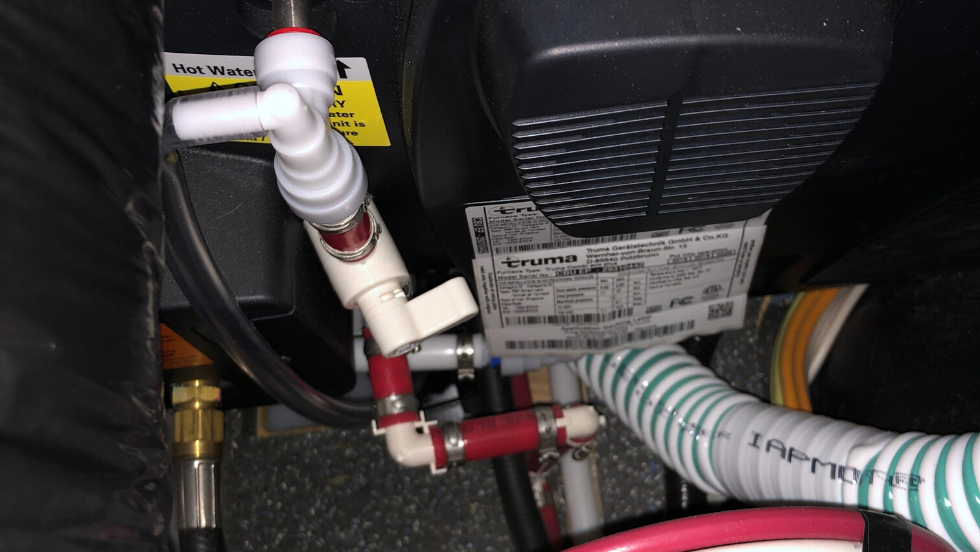
The #1 reason RVers upgrade to tankless: no more running out mid-shower. “With a tankless unit you won’t run out of hot water… unless you run out of water,” explains the RV Geeks, full-time RVers who installed a Truma AquaGo in their motorhome.
As long as you have water in your fresh tank (when boondocking) or city water hookups (at campgrounds), hot water keeps flowing. This is transformative for families, full-timers, or anyone who’s endured the “navy shower” to conserve a 6-gallon tank.
2. Superior Energy Efficiency
Tankless heaters eliminate standby energy loss—the wasted energy traditional tanks use, continuously heating water whether you use it or not. “Because they heat water only as needed, tankless units eliminate standby energy loss—a common drawback of traditional models,” notes Furrion.
Real-world results: The Girard tankless heater consumes only about half as much propane as a six-gallon tank water heater would. Over months of full-time RVing or frequent rentals, this adds up to significant propane savings.
3. Space-Saving Design
Traditional RV water heaters with 6-10 gallon tanks take up precious space in your rig. Instant RV water heaters are “generally half the size of traditional RV water heater[s],” freeing up valuable mechanical bay space for storage or other upgrades.
Many tankless units are designed as direct replacements for Suburban or Atwood tank heaters, fitting the same exterior door opening with retrofit kits available.
4. Longer Lifespan
On average, tankless water heaters last 15-20 years compared to 6-10 years for traditional tank models. The simpler design and reduced wear from continuous heating cycles contribute to greater longevity.
5. No Waiting for Hot Water
With tank systems, you turn on the heater and wait 10-30 minutes for the water to heat sufficiently. Tankless systems deliver warm water within seconds of turning on the tap—perfect for spontaneous showers without planning ahead.
6. Precise Temperature Control
Modern tankless heaters feature digital control panels that let you set exact temperatures from inside your RV. No more scalding surprises or lukewarm disappointments—just consistent, comfortable water at your preferred temperature.
For more ways to improve your RV, check out our 34 valuable RV upgrades and RV improvements guide.
Drawbacks of Tankless RV Water Heaters
1. Higher Upfront Cost
This is the biggest barrier for many RVers. Tankless water heaters cost $400-600 more than comparable tank models, and factor in the unit itself, a retrofit door kit, and potential installation costs, and the investment can be significant.
However, full-time RVers and RV rental business owners often recoup the cost through propane savings and increased rental appeal. If you’re renting out your RV, a tankless heater becomes a premium feature that justifies higher nightly rates.
2. Minimum Flow Rate Requirements
Tankless systems require a minimum water flow rate to activate. If the flow is too low—such as when using a single faucet at low pressure—you might experience lukewarm water or fluctuations in temperature.
This is particularly problematic with low-flow faucets or aerators. Some early adopters reported needing to remove aerators to achieve sufficient flow for the heater to ignite. Newer models have improved sensitivity, but it’s still a consideration, especially at campgrounds with notoriously low water pressure.
3. Propane-Only Operation
Most RV tankless heaters run exclusively on propane, unlike traditional tank models that offer electric, propane, or hybrid options. “One drawback to me is they are propane only,” notes a Grand Design RV owner who camps with shore power frequently.
If you regularly camp at sites with included electricity, you’ll miss the option to switch to cheaper electric heating. Your propane consumption will be higher than if you could alternate energy sources.
4. Temperature Fluctuations
Some users experience the “cold sandwich effect”—a burst of cold water when you briefly turn off the tap, then turn it back on (like when rinsing shampoo). As one forum user explains: “When we had one and did a Navy shower, we would ALWAYS get a jolt of cold water till the heater kicked in again”.
Premium models like the Truma AquaGo with built-in mixing tanks solve this by maintaining consistent temperature, but budget models may experience this issue.
5. Complex Installation
Unlike DIY-friendly tank heaters, tankless systems typically require professional installation due to the need for proper venting, propane line connections, and electrical wiring for controls. Budget $200-500 additional for professional installation unless you’re experienced with RV systems.
6. Winterization Challenges
Cold climates pose a challenge for any RV water heater, but tankless systems can be particularly sensitive to freezing. While modern units include antifreeze protection, extreme temperatures may still require additional precautions.
For tips on RV winter travel, see our full-time RVers winter guide.
How do tankless RV water heaters compare to traditional tank models?
Tankless heaters provide unlimited hot water and better efficiency, but cost more and require higher flow; tank heaters are cheaper, simpler, offer electric/propane hybrid options, but limit hot water supply to 6-10 gallons.
Let’s break down the key differences:
Hot Water Supply
Traditional: 6-10 gallons per heating cycle. Sufficient for 1-2 quick showers before waiting 10-30 minutes for reheating. Families often strategize shower order or utilize campground bathhouses.
Tankless: Virtually unlimited as long as the water supply and propane last. “Back-to-back showers for however long we want to. A true luxury!” reports one satisfied Girard tankless owner (Forest River Forums, 2021).
Energy Source Options
Traditional: Propane-only, electric-only, or propane/electric hybrid models available. Hybrids let you use cheaper campground electricity when available and switch to propane when boondocking.
Tankless: Almost exclusively propane-only. “Depends on usage. For me, the tankless uses more propane simply because it doesn’t have an electric option,” explains one RVer who camps with shore power frequently (Forest River Forums, 2021).
Size and Weight
Traditional: 6-10 gallon tanks add 50-85 pounds when full, plus the heater unit weight. Take up substantial space in exterior mechanical bays.
Tankless: Half the size of traditional heaters, no water weight to carry, freeing up space and reducing total RV weight.
Maintenance
Traditional: Annual anode rod replacement (if applicable), regular tank flushing to remove sediment, and drain completely for winterization.
Tankless: Simpler design and reduced wear and tear on the mechanical components mean easier maintenance and fewer parts that can fail. No anode rod to replace, no tank to flush.
Operating Cost
Traditional: Continuous propane or electric usage maintains tank temperature 24/7, even when not using hot water.
Tankless: Only heats water when it is demanded, using 50% less propane over time. However, remember—no electric option means you can’t take advantage of free campground electricity.
Purchase and Installation Cost
Traditional: $300-500 for the unit, DIY-friendly installation for most RVers with basic tools.
Tankless: $700-1,100 for the unit plus retrofit kit, typically requires professional installation, adding $200-500.
Lifespan
Traditional: 6-10 years average
Tankless: 15-20 years average
Best For
Traditional: Weekend campers, occasional travelers, those who camp primarily with shore power, budget-conscious buyers, DIY maintainers.
Tankless: Full-time RVers, families needing consistent hot water, boondockers (despite propane-only), RV rental businesses wanting premium amenities, and those planning long-term RV ownership.
If you plan to camp in locations where electricity is included, the gas+electric hybrid RV water heater would be a great choice. If you plan to camp without electric hookups, a gas-only RV water heater is a reliable and affordable option. For those living full-time in their camper and/or those who have a family planning to take lots of hot showers, a tankless RV water heater will provide you and the family with a steady stream of hot water.
For more RV system information, explore our RV electricity basics guide.
What should you consider before installing a tankless RV water heater?
Before installing, evaluate your typical water usage patterns, existing RV compatibility, installation complexity, winterization needs, and whether upfront costs align with your RVing frequency and style.
Estimate Your Water Usage
The most important question isn’t “how much hot water do I need per day?” but rather “how much hot water will I use simultaneously?”
Average RV water consumption rates:
- Bathroom sink: 0.5-1.0 GPM
- Kitchen sink: 1.0-1.5 GPM
- Shower: 1.5-3.0 GPM
- Dishwashing: 1.5 GPM
Tankless heaters range from 1.5-6 GPM capacity. A 2.4 GPM unit handles one shower comfortably but might struggle if someone’s showering while another person washes dishes. For simultaneous use, look for 3.5+ GPM models.
Estimate your water usage before shopping for a tankless water heater for RV use,” advises Camping World. “Compare and contrast models to meet your water usage demands.
Check Installation Compatibility
Not all tankless heaters fit all RVs. Because tankless RV water heaters are a different size and shape than traditional propane/electric RV water heaters, it can sometimes be difficult to retrofit tankless heaters into your RV.
Key compatibility questions:
- Exterior door size: Does the tankless unit fit your existing water heater door opening? Many models offer retrofit kits for standard 16″ x 16″ Suburban or Atwood openings.
- Propane line capacity: Does your LP system support the 60,000+ BTU demand?
- Venting: Does your mechanical bay allow proper venting?
- Electrical: Does your 12V system handle the control panel and ignition?
Understand Winterization Requirements
Tankless heaters require special winterization considerations. While many include freeze protection features that automatically heat water when temperatures drop below 43°F, this drains your propane. In extreme cold, you may need heated enclosures or to completely bypass the system.
Calculate True Costs vs. Benefits
Initial investment: $700-1,100 (unit + retrofit kit) + $200-500 (professional installation) = $900-1,600 total
Annual propane savings: Approximately 50% less propane usage compared to tank heaters. For full-timers using 2-3 gallons of propane daily for hot water, this could save $400-600 annually at $3/gallon propane.
Payback period: 2-3 years for full-timers; 4-6 years for frequent weekend campers; may never pay back for occasional users.
If you’re a full-time RVer or regularly rent out your RV, you can easily recoup the increased up-front costs because a tankless RV water heater saves you money on propane and/or electricity.
Factor in Your Camping Style
You’re a strong tankless candidate if:
- Full-time RVing or extended trips (months, not weekends)
- Traveling with a family needing multiple daily showers
- Boondocking frequently (propane efficiency matters)
- Running an RV rental business (premium feature attracts bookings)
- Planning to keep your RV 5+ years (enjoy full lifespan benefit)
Stick with traditional if:
- Weekend camping only (won’t recoup investment)
- Solo or couple travelers with modest hot water needs
- Camp primarily with shore power (lose electric heating option)
- Tight budget (traditional costs half as much)
- Prefer simple DIY maintenance
For more on making smart RV investments, see our RV depreciation and value guide.
What are the top tankless RV water heater brands and models?
Leading tankless RV water heater brands include Truma, Girard, Furrion, Suburban, and Fogatti, with models ranging from $400-1,100 offering 2.4-6 GPM flow rates and 60,000-68,000 BTU heating capacity.
Premium Models
The gold standard for RV tankless heaters is installed by manufacturers like Grand Design. Features include:
- 2.6 GPM flow rate
- Built-in mixing tank eliminates temperature fluctuations
- High-altitude capable (10,000+ feet)
- Sophisticated remote control with a large LCD
- 3-year warranty (best in class)
The original RV tankless pioneer since 2009:
- Consumes 50% less propane than 6-gallon tank heaters
- Onboard microprocessor controls flow and temperature
- Digital control panel: 95°F-124°F range
- Error code display for troubleshooting
For more on RV renovations and upgrades, explore our easy RV remodel ideas and RV renovation rules.
Mid-Range Models
Furrion 2.4 GPM Tankless (RV Products)
Amazon’s Choice for retrofit applications:
- VibrationSmart technology for rough terrain
- Delivers hot water at 32°F ambient temperature
- Specifically designed for the Suburban 4/6 gallon replacement
- Fits standard 16.14″ x 16.14″ door opening
- 2-year warranty
Best for eliminating “cold sandwich” effect:
- Built-in mixing tank for stable temperatures
- High-altitude performance (9,000+ feet tested)
- Freeze-proof design with pressure relief valve
- Large LCD remote controller
- 3-year warranty
Budget-Friendly Models
Best overall value per Amazon’s 622+ verified reviews (4.5 stars):
- Powerful 65,000 BTU = 3.96 GPM flow
- CSA certified for safety
- High-altitude capability (10,000 feet)
- Multi-function remote: 80°F-140°F range
- 2-year warranty
Top budget pick:
- 68,000 BTU output exceeds many premium models
- 3.9 GPM for family use
- 12V low battery drain (perfect for boondocking)
- Black door option for aesthetic flexibility
High-altitude specialist:
- Usability up to 9,800 feet elevation
- Staged combustion prevents overheating in summer
- Built-in pressure release valve
- Wired remote controller
- CSA certified
Installation Accessories
Most units require retrofit kits ($50-150) to adapt to your existing water heater door opening. Suburban and Atwood are the two main traditional heater manufacturers, so look for retrofit kits specifying compatibility with your current brand and model.
For more creative RV improvements, check out RV hacks and tips and one-afternoon RV projects.
Make Every Shower in Your RV a Hot One
Tankless RV water heaters have revolutionized how full-time RVers and frequent campers experience hot water on the road. No more strategic shower scheduling, no more navy showers to conserve the 6-gallon tank, no more waiting 30 minutes for water to heat after someone else’s shower depleted the supply.
The question isn’t “do tankless heaters work?”—they absolutely do. The question is whether the $900-1,600 investment makes sense for your specific RV lifestyle.
The verdict is clear:
Go tankless if you’re full-timing, traveling with family, renting out your RV, or planning to keep your rig for 5+ years. The unlimited hot water, 50% propane savings, and longer lifespan justify the investment.
Stick with traditional if you’re weekend camping occasionally, traveling solo or as a couple with modest needs, camp primarily with shore power (where electric heating saves money), or need to keep initial costs low.
Not sure if you’re ready to commit? Experience different RV setups firsthand by renting various RV types on Outdoorsy. Try rigs with tankless heaters to see if the upgrade suits your travel style before investing in one for your own RV. Rent a Class A motorhome, travel trailer, or Class B campervan equipped with tankless systems to test them in real-world conditions.
Already own an RV and ready to upgrade? Consider professional installation to ensure proper setup, maintain warranty coverage, and avoid compatibility issues. Your local RV service center or mobile RV technician can assess your specific rig and recommend the best tankless model for your needs.
Listing your RV for rent? A tankless water heater is a premium amenity that attracts bookings and justifies higher nightly rates. This upgrade comes in the form of a tankless water heater, an amazing little gadget that literally heats water on demand. Installing a tankless water heater means no more turning on the heater and waiting for the water to warm up. It also means you will never run out of hot water while doing dishes or taking a shower again. This is an incredible upgrade that we recommend to every RV owner.
List your upgraded RV on Outdoorsy and start earning income from your investment. Learn more about maximizing your RV rental business and keeping maintenance costs down.
The open road is calling—answer it with hot water that never runs out.
Frequently Asked Questions
Can I install a tankless RV water heater myself?
While experienced RVers can DIY install tankless heaters, most require professional installation due to propane line connections, venting requirements, and electrical wiring for control panels.
Do tankless RV water heaters work while boondocking?
Yes, tankless heaters work perfectly when boondocking as long as you have adequate propane and water in your fresh tank. In fact, their efficiency makes them ideal for off-grid camping.
How much propane does a tankless RV water heater use?
Tankless heaters use approximately 50% less propane than traditional tank models because they only heat water on demand rather than continuously maintaining tank temperature. A typical tankless unit consumes 0.5-0.8 gallons of propane per hour of use. However, every time you turn on hot water, you’re “igniting a 60,000 BTU flame thrower” momentarily
Will a tankless water heater work with my RV’s low water pressure?
This is a common concern and legitimate issue with some tankless models. They require minimum flow rates (typically 0.5 GPM) to activate. At campgrounds with notoriously low water pressure or when using low-flow faucets/aerators, some heaters struggle to ignite or maintain a consistent temperature. Newer models have improved sensitivity, but it’s worth checking reviews specifically mentioning low-pressure performance.
How long do tankless RV water heaters last?
Tankless RV water heaters typically last 15-20 years compared to 6-10 years for traditional tank models. Their simpler design with fewer mechanical parts and the elimination of continuous heating cycles contribute to extended longevity. This longer lifespan helps offset the higher initial investment, especially if you keep your RV for many years. Proper maintenance and winterization further extend their functional life.