
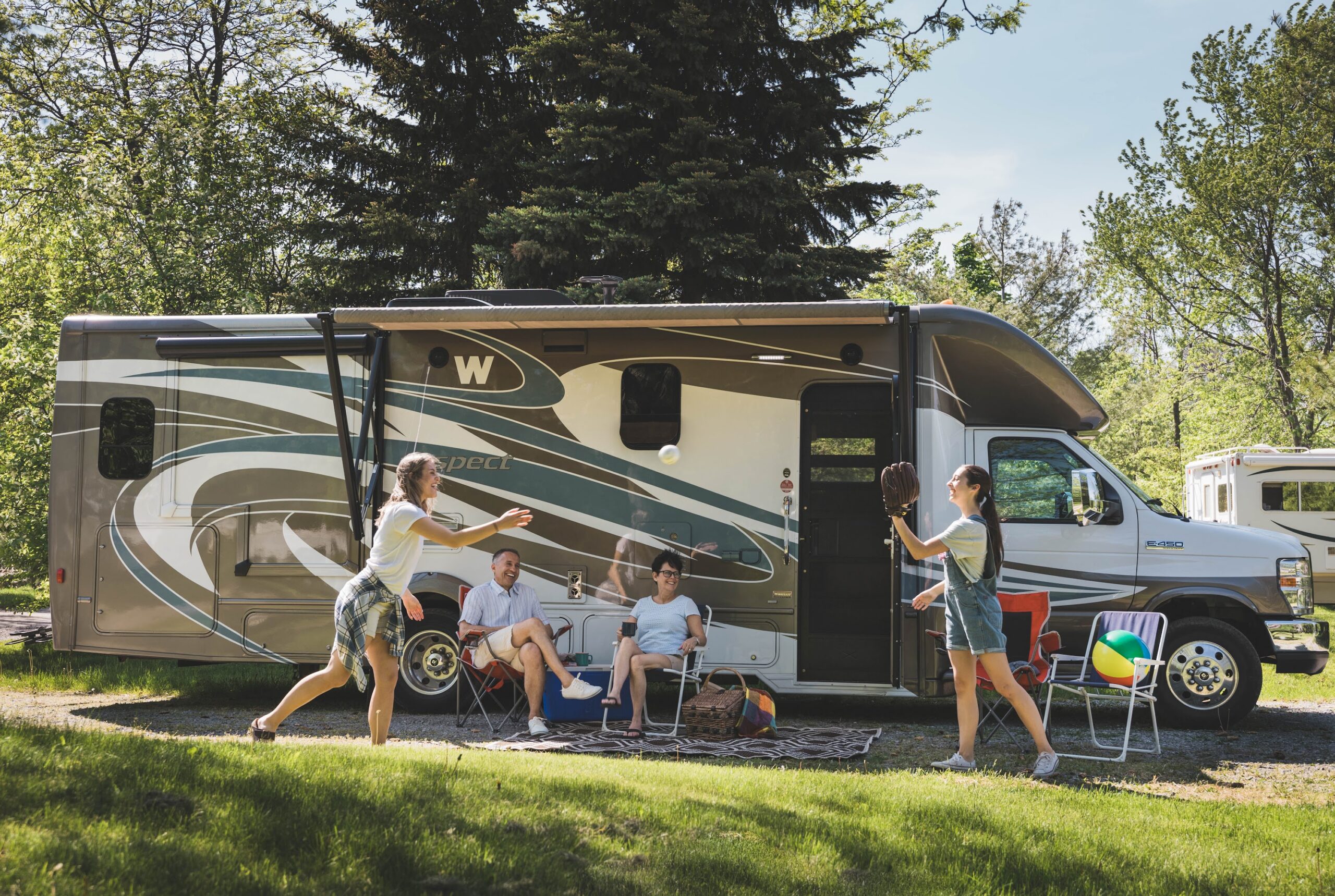
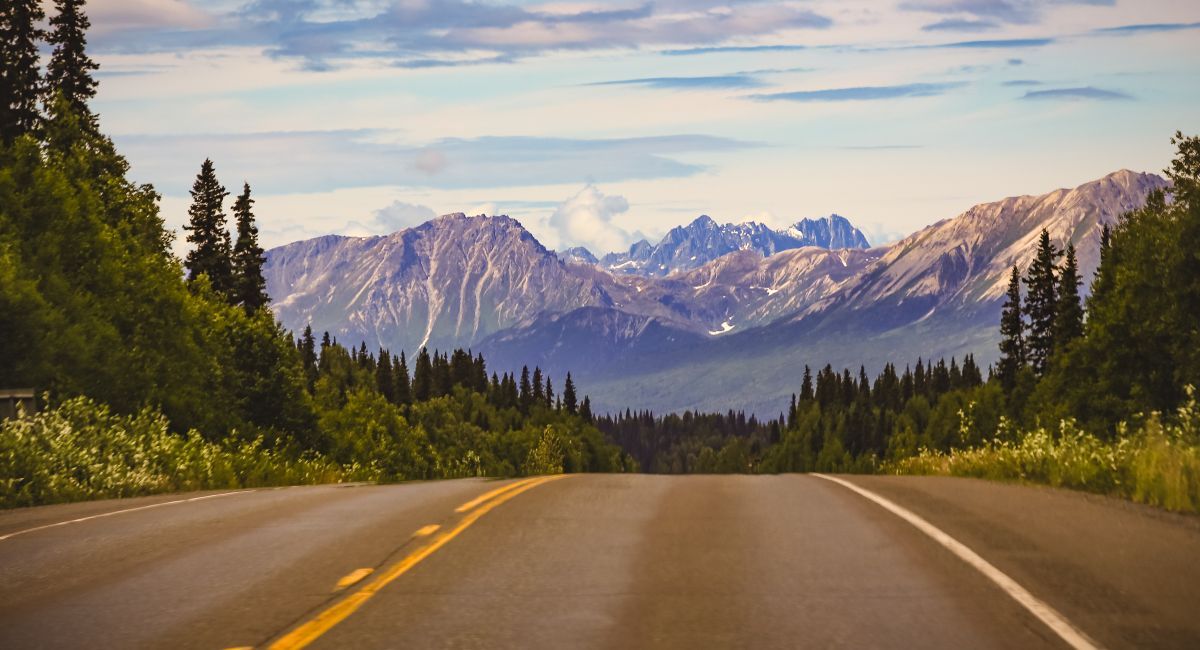
An Alaska Highway RV trip is one of the great North American drives — roughly 1,390 miles of boreal forest, river valleys, and mountain passes from Dawson Creek, British Columbia to Delta Junction, Alaska. It is also a real commitment, and the smartest planning question is not "which campground first" but "do I drive my own rig up, or fly in and rent one once I'm here?" This guide answers both, with the mileage, timing, border rules, and prep that actually decide the trip.
The quick version
- The Alaska Highway (the "Alcan") runs about 1,390 miles, Dawson Creek, BC to Delta Junction, AK. Plan 7 to 10 days each way to enjoy it rather than endure it.
- Two honest routes to the same trip: drive your own RV up from the Lower 48, or fly in and rent in Anchorage or Fairbanks and skip roughly 2,800 round-trip miles of wear on the Alcan alone.
- Everyone in the vehicle needs an approved border document — a passport is the safest bet, though U.S. citizens can also use a passport card, NEXUS card, or enhanced driver's license at land crossings. Bringing a dog? It needs a rabies certificate to enter Canada (age 3 months and up), and a CDC Dog Import Form (plus a microchip, age 6 months and up) to re-enter the US.
- The season is roughly late May through mid-September. Expect frost heaves, gravel breaks, and summer construction — the road is paved end to end but rough in spots.
- A mid-size rig handles the Alcan better than a 40-footer. Prep for windshield and tire damage, and keep the tank above half.
Driving to Alaska sounds intimidating until you break it into decisions. Let's break it down.
How long is the Alaska Highway, and how many days should you plan?
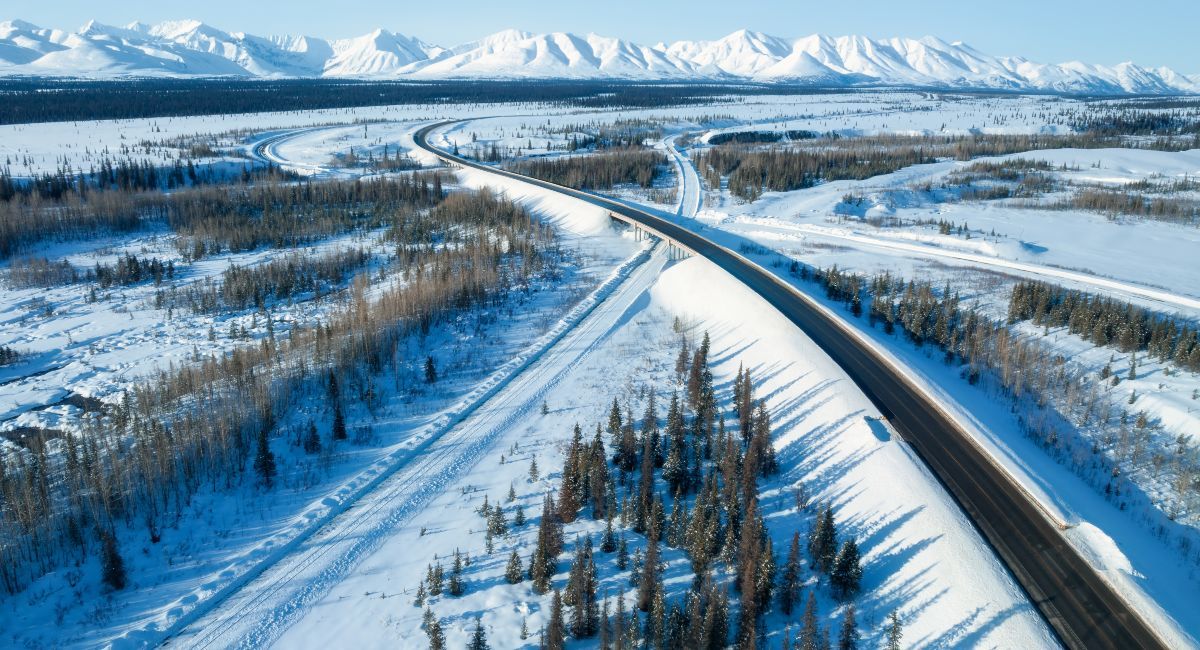
The Alaska Highway covers about 1,390 miles from its official start in Dawson Creek, British Columbia to Delta Junction, Alaska, and most RVers give it 7 to 10 days each way (Travel Alaska). You can push it faster, but the point of the Alcan is the country it crosses, not the finish line.
That mileage is only the highway itself. If you drive from, say, Seattle, you'll add about 800 more miles just to reach Dawson Creek (The Milepost) — so a "drive your own RV to Alaska" trip is realistically a three-week round trip before you've spent a single day in Denali. In our experience, the renters who love the Alcan most are usually the ones who fly into Anchorage or Fairbanks and pick the rig up there, trading the long haul for more days actually parked in Alaska.
Should you drive your own RV or rent one in Alaska?
Drive your own rig if you already own one and the journey itself is the trip; rent in Alaska if you want more days in the state and less wear on your vehicle. Renting locally skips roughly 2,800 round-trip miles of gravel and frost heaves on the Alcan alone, and it's often the cheaper path once you count fuel and time.
The drive-your-own math
Driving up works when you own a capable rig, have three weeks or more, and really want the Lower-48-to-Alaska passage — the Rockies, the Yukon, the real "we drove here" story. Two main routes get you there: the classic route to the Alcan's official start in Dawson Creek, and the more remote Cassiar Highway, which runs north through western British Columbia and joins the Alaska Highway near Watson Lake, Yukon. Either way, you log serious mileage before the highway's best stretches. The costs are real: fuel across thousands of miles, wear on tires and windshield, and days spent in transit rather than in the parks.
The rent-in-Alaska math
Fly into Anchorage or Fairbanks, pick up a motorhome, and you start your trip at the doorstep of Denali instead of a week away from it. Outdoorsy hosts across the state list everything from camper vans to family motorhomes, so you can base out of Fairbanks for the north or Anchorage for the Kenai. RVers we talk to who've done both consistently say the fly-and-rent version leaves them less tired and with more time where it counts.
The one-way option
If you're set on driving one direction, ask about one-way rentals or plan a loop that returns via the Alaska Marine Highway ferry. Either way, confirm the details in writing before you commit — one-way logistics are the part first-timers most often underestimate.
When is the best time to drive the Alcan?
The practical window is roughly late May through mid-September, when campgrounds and roadside services are open and daylight runs long into the evening; outside it, many campgrounds and lodges close. Shoulder weeks on either side can be quieter, but you trade that for closed services and colder nights.
June and July give you the longest days and the fullest slate of open businesses. Late August into early September brings thinner crowds and the first fall color, with the tradeoff that some seasonal stops start shutting down. Whatever week you pick, book popular campgrounds ahead — they fill quickly on summer weekends.
What are the road conditions really like — and how do you prep for them?
The Alaska Highway is paved end to end, but "paved" here still means frost heaves, potholes, gravel breaks, and summer road construction (Travel Alaska). None of it is a reason to stay home — it's a reason to slow down and prep.
Frost heaves buckle the pavement where the ground freezes and thaws, and they arrive without much warning; ease off the throttle when you see the ripples. Gravel breaks between paved sections throw rocks, which is why we've heard enough stories about cracked windshields on the Alcan to flag it before you go — carry a spare tire (two if you can), and consider a windshield protection film or a headlight cover. Summer is construction season, so expect pilot cars and short waits, and check DriveBC, 511 Yukon, and Alaska 511 for closures before each day's drive. Wildlife is the other constant: watch for moose especially, slow down, and give animals room.
What do you need to cross the Canadian border with an RV — and pets?
Everyone in the vehicle needs an approved travel document. For U.S. citizens at a land crossing, that means a valid passport, passport card, NEXUS card, or U.S. enhanced driver's license; the Canada Border Services Agency recommends traveling with a valid passport, and the passport card covers land re-entry to the US but not international flights (U.S. State Department). Bring current vehicle registration and a valid driver's license, and if you're traveling with a minor whose other parent isn't along, carry a signed consent letter. Dogs add a step in each direction: to enter Canada, a dog 3 months or older needs a valid rabies vaccination certificate (CFIA); to re-enter the United States, the CDC has required since August 1, 2024 that the dog be at least 6 months old, microchipped, and covered by a completed CDC Dog Import Form — rabies-vaccination proof isn't required for a dog that has only been in the US and Canada over the past six months.
A few RV-specific notes make the crossing smoother. Both countries limit what food, firewood, and firearms you can bring, so check the current rules before you pack the pantry and the campfire wood. Border waits vary, so build in buffer time rather than banking on a quick pass. If you're renting, confirm with your host that the rig is cleared for cross-border travel — rental terms vary, so get it in writing.
Where do you camp, fuel up, and dump along the way?
Reserve popular campgrounds early, keep your fuel tank above half, and use signed dump stations as you find them rather than waiting for the perfect one. On a corridor this remote, running low on any of the three is the avoidable mistake.
Campgrounds along the Alcan range from full-hookup private parks to basic government sites, and the good ones fill on summer weekends (Travel Alaska). Fuel is the discipline that matters most — stations can be far apart and some small-town pumps keep short or seasonal hours, so RVers we talk to who've driven both directions consistently top off at half a tank rather than a quarter, in line with KOA's advice to keep the tank at least half full. Map your resupply points — gas, groceries, dump stations, and cell coverage — before each day's drive, because cell service disappears for long stretches.
What size or class of RV is best for the Alaska Highway?
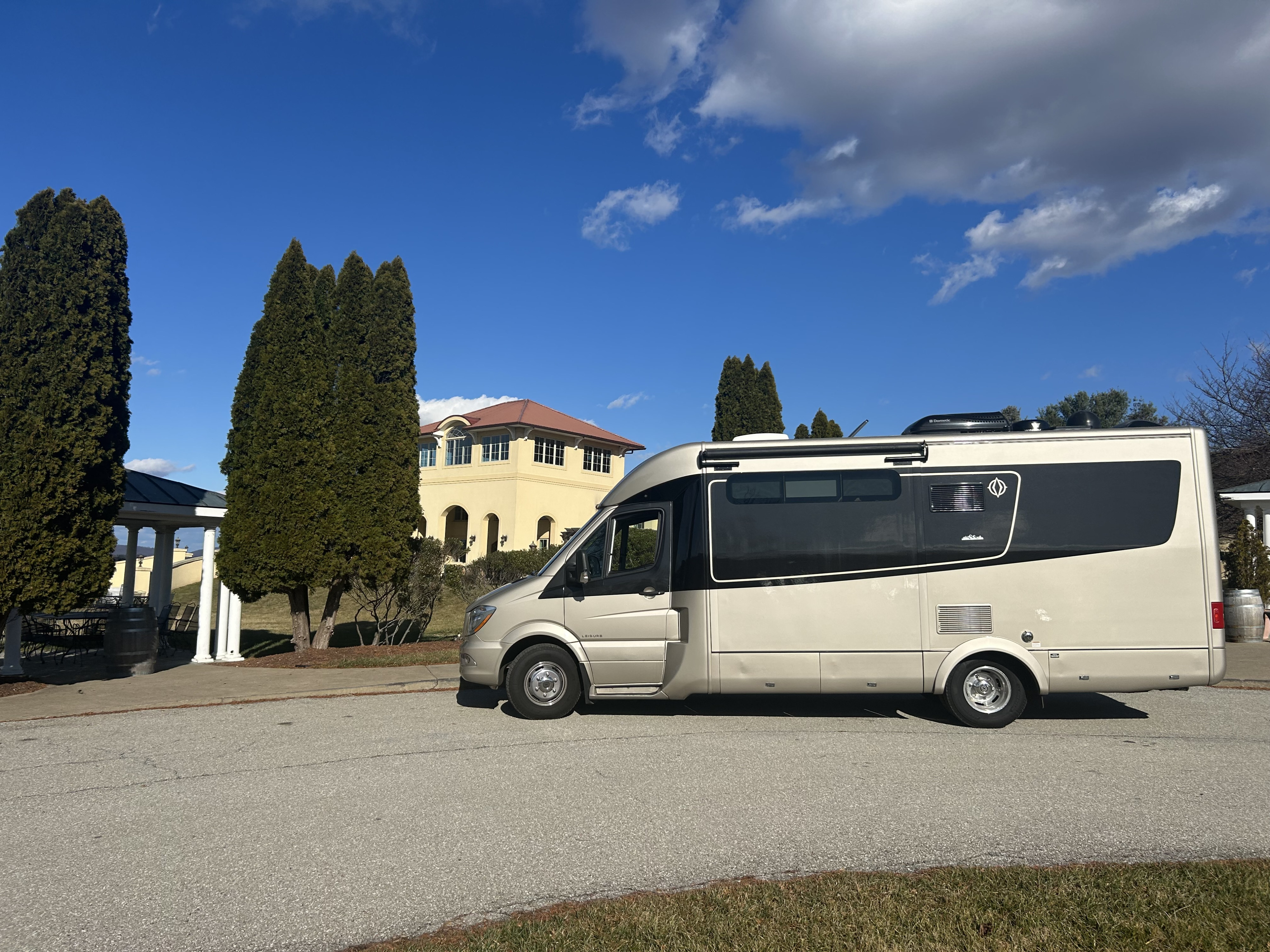
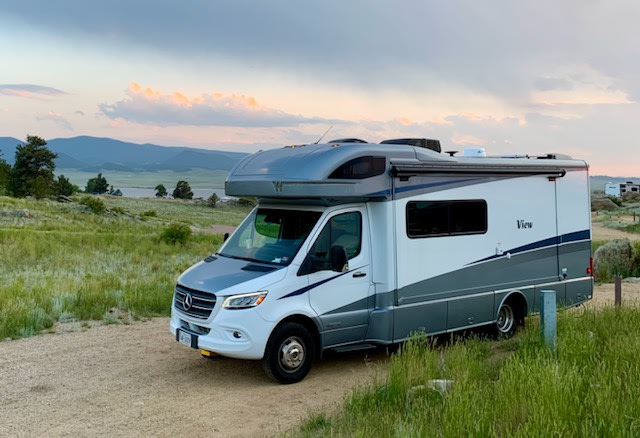
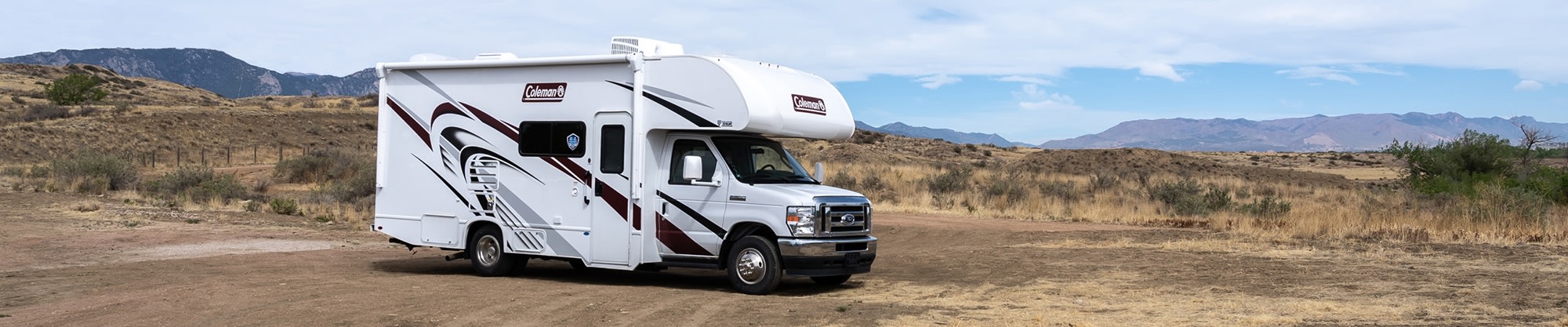
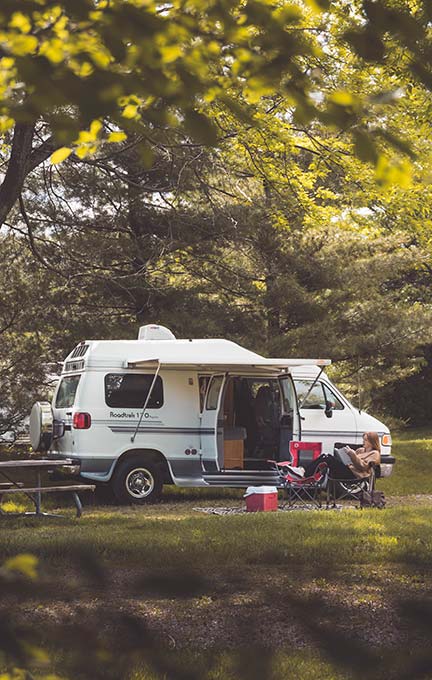
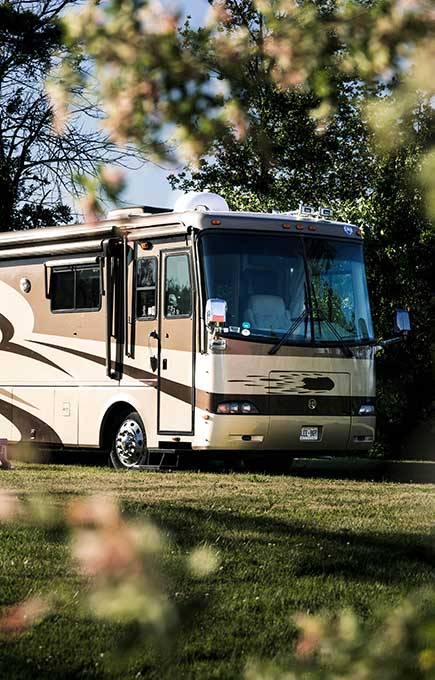
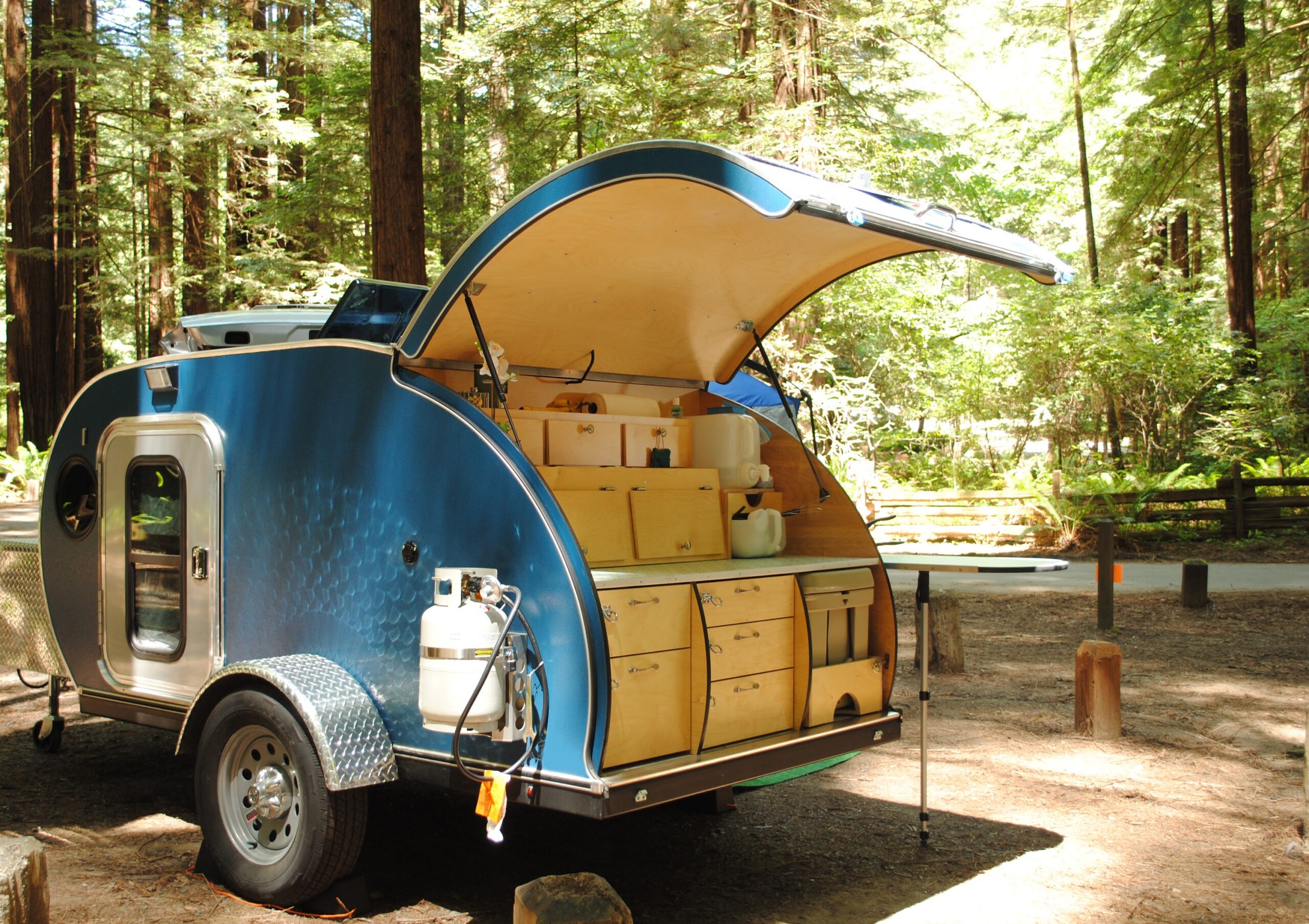
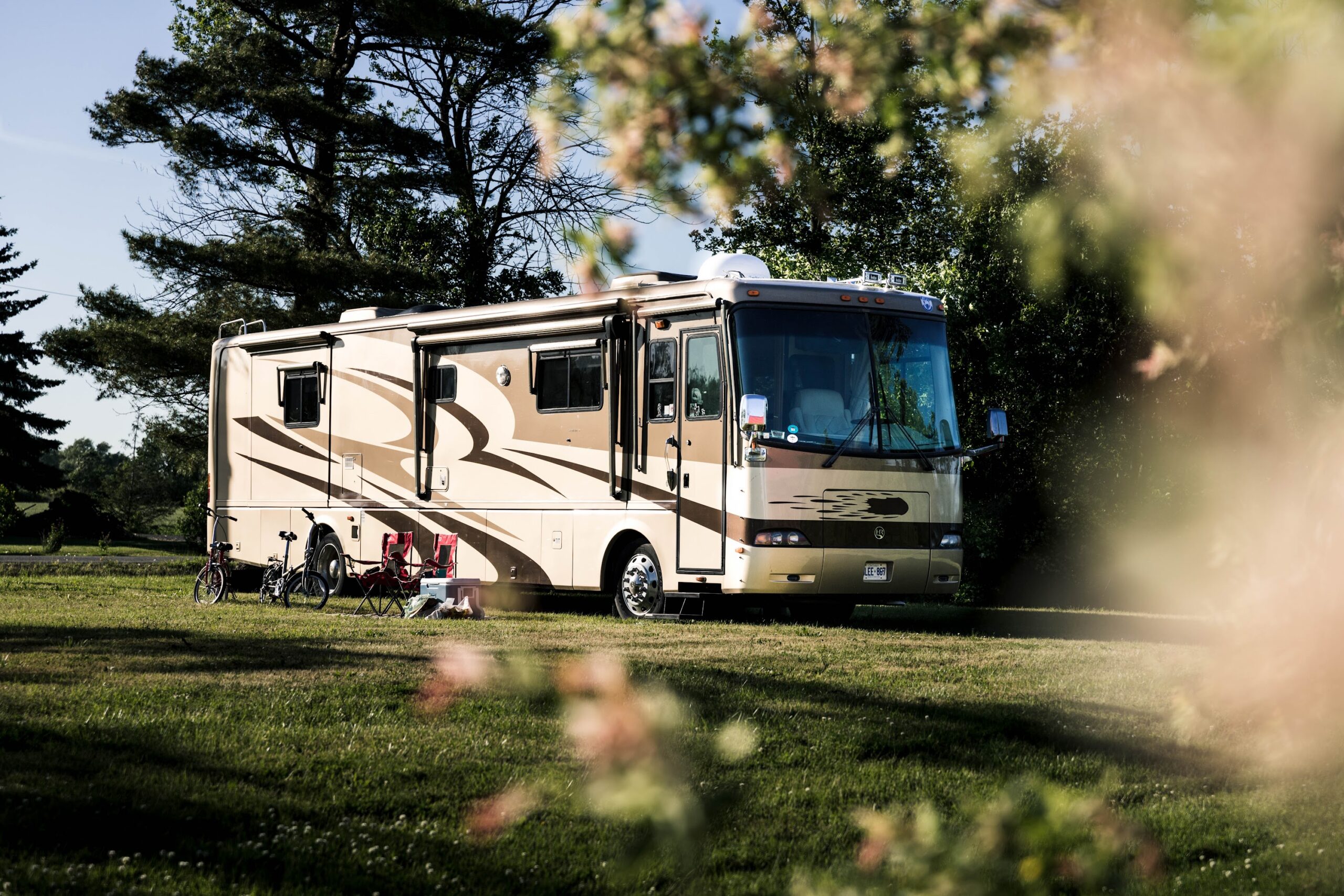
A mid-size rig — a camper van or a smaller Class C in the mid-20-foot range — is the sweet spot: big enough to live in for weeks, small enough to take gravel and frost heaves without punishing you or the vehicle. A 40-foot Class A can make the drive, but it magnifies every rough mile.
Fuel economy compounds the case: by common industry estimates, a big Class A returns roughly 6 to 10 MPG, while a mid-size Class C sits around 10 to 14 and a camper van reaches 18 to 24. Over thousands of Alcan miles, that gap is real money. If you're weighing rig types before you book, our class-by-class comparison walks through the tradeoffs — for the Alaska Highway, maneuverability and fuel usually beat sheer square footage.
Ready to roam? Browse RV rentals in Alaska and start your Alcan trip where the good part begins. Find what moves you.
About this guide
We compile our Outdoorsy guides from verified sources — for this one, the State of Alaska's official travel resources, U.S. and Canadian government border and pet-import guidance (the U.S. State Department, CDC, CBSA, and CFIA), and established RV-to-Alaska route and prep guidance — alongside conversations with Outdoorsy hosts and renters who drive and rent along this corridor, and well-traveled patterns in the RV community. Mileage, border rules, and campground details reflect public information current at publication; always confirm current road conditions, border requirements, and reservations before you go.