
At a glance
Acadia is one of the most access-restricted major national parks for RVs. Park Loop Road has height limits as low as 11 feet 8 inches. Cadillac Summit Road is closed to RVs entirely. Multiple parking lots ban them. Both Mount Desert Island campgrounds (Blackwoods 281 sites, Seawall 202 sites) cap at 35 feet — no large Class A rigs. Schoodic Woods (89 sites, one site fits up to 70 ft) is the only park campground with hookups, but it's on a separate peninsula. The solution: the free Island Explorer shuttle (full service late June to mid-October). Leave the RV at camp and bus to most trailheads and attractions. Entrance: $35/vehicle. Cadillac Summit Road vehicle reservation: $6. Pick up from Portland, Maine or Boston.
What RV restrictions should you know before arriving at Acadia?
The first thing most first-time RV renters learn at Acadia is that the park wasn't designed for their vehicle. Park Loop Road — the 27-mile scenic drive that links many of the park's best-known sights — is closed to vehicles taller than 12 feet 2 inches between Sieur de Monts and the Sand Beach Entrance Station, according to the NPS oversized vehicles page. The section from Fabbri Picnic Area to Wildwood Stables is closed to vehicles taller than 12 feet, and the shortest underpass on the road clears 11 feet 8 inches. Stanley Brook Road clears just 10 feet 4 inches. If your motorhome stands 12 feet or taller, as many Class A models do, some of these roads are off-limits.
It gets more specific. Cadillac Summit Road, Echo Lake Beach Road, Duck Brook Road, and Lurvey Spring Road are all closed to RVs and trailers. The parking lots at Sand Beach, Jordan Pond South, and Bubble Pond won't admit them either. Acadia essentially tells RV drivers: you can camp here, but you can't drive everywhere. RVers we talk to say the trip got easier the moment they stopped trying to drive the Loop Road and started riding the bus.
This sounds like a dealbreaker until you discover the Island Explorer — a free shuttle that connects your campsite to most trailheads and attractions in the park. Park the RV, ride the bus, see nearly everything. That's how Acadia works for RV travelers, and it works well once you plan for it.
Two more things first-timers miss: the park's fee system is fully cashless (cards and mobile payments), and non-US residents age 16 and older pay an additional $100 per person on top of the $35 vehicle entrance fee.
Which campground should first-timers choose?
Three NPS campgrounds accept RVs at Acadia. The fourth — Duck Harbor on Isle au Haut — is five lean-to shelters reachable only by the passenger mailboat from Stonington. Your real choice is between Mount Desert Island (close to everything, no hookups, 35-foot cap) and the Schoodic Peninsula (hookups, bigger rigs, quieter, separate from the main park).
Blackwoods: the first-timer default
281 sites (60 designated for RVs), maximum 35 feet (some sites fit only 20 feet). $30 per night, no hookups, dump station on-site. Open May 1 through October 18, 2026. Reservation-only through Recreation.gov. About 5 miles south of Bar Harbor on Route 3 — the closest campground to restaurants, groceries, and whale watching tours. The Island Explorer stops at the campground, putting you on the shuttle network without moving your rig.
Hosts tell us the most common post-trip complaint from Acadia first-timers isn't about the campground or the weather — it's about the 35-foot limit. Some book a Class A, drive all day, and find out at check-in that their rig doesn't fit. Check your rental length before you book the campsite.
Seawall: the quieter alternative
202 sites (59 RV-designated), maximum 35 feet. $30 per night for drive-up sites, no hookups, dump station on-site. Open May 20 through October 11, 2026. Reservation-only. On the western "quiet side" of Mount Desert Island, away from Bar Harbor's crowds. Island Explorer access. Better sunset views than Blackwoods, but farther from restaurants and supplies.
Schoodic Woods: the hookup option
89 sites (41 RV-designated), with one site that accommodates rigs up to 70 feet. The only NPS campground in Acadia with electric and water hookups — $36 per night for electric, $40 for electric plus water. Open May 20 through October 11, 2026. Dump station, flush and vault toilets, internet connectivity, ranger programs.
The catch: Schoodic is on a separate peninsula, about a 1-hour-15-minute drive from Bar Harbor around Frenchman Bay. It has its own Island Explorer route and its own coastline (Schoodic Point is stunning), but you're not on Mount Desert Island. If you need hookups or have a rig over 35 feet, this is your answer. If proximity to the main park is your priority, it's a trade-off.
How does the Island Explorer shuttle work for RV campers?
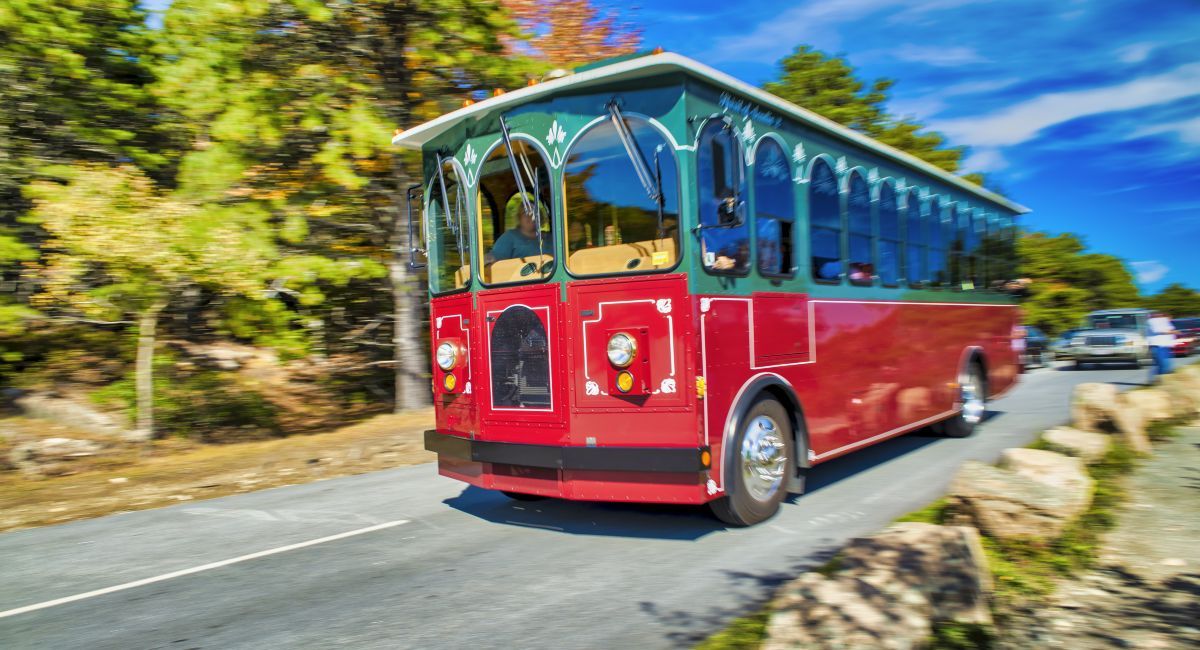
The Island Explorer is a free, propane-powered bus system. In 2026, full service runs June 23 through October 12, and the Gateway Center, Loop Road, and Schoodic routes start earlier, on May 20. Routes connect the campgrounds to Bar Harbor, Jordan Pond House, Sand Beach, Thunder Hole, Schoodic Peninsula, and most major trailheads. The buses do not serve the summit of Cadillac Mountain. The Loop Road and Jordan Pond routes run every 30 minutes; the Blackwoods route runs about once an hour, and the Southwest Harbor route that serves Seawall runs roughly every two to three hours. Exterior racks carry up to six bikes (no e-bikes, fat-tire bikes, or tag-alongs). We've watched plenty of first-timers spend more time circling for parking than hiking — the bus fixes that.
For RV campers, this is the system that makes Acadia work. Instead of fighting height restrictions, hunting for oversized parking, and threading the one-way Park Loop Road in a 35-foot rig, you walk to the bus stop at your campground and ride to wherever you're going. It's less stressful and lets you bring bikes along to extend your range from any bus stop.
The Schoodic Peninsula has its own Island Explorer route connecting Schoodic Woods to Schoodic Point and the ferry terminal at Winter Harbor. From Winter Harbor, you can catch the separately ticketed passenger ferry to Bar Harbor and pick up the Mount Desert Island routes — a full-day adventure on its own.
What are the must-see stops for first-timers at Acadia?
Cadillac Mountain sunrise: The bucket list item, and the logistics trip up RV campers every season. You need a $6 vehicle reservation through Recreation.gov to drive Cadillac Summit Road from May 20 through October 25, 2026. You can't drive your RV up — RVs and trailers are prohibited on the summit road, and so is any vehicle over 21 feet long, including bike racks and hitch attachments. So you either drive a tow vehicle or other small car, take a taxi, or bike or hike the three-mile summit road (no reservation needed on foot or bike). The Island Explorer does not serve the summit. The 70% of reservations released two days ahead at 10 AM ET are your best shot if you didn't plan 90 days out.
Jordan Pond House: Afternoon tea and popovers on the lawn with a view of the Bubbles. Bus accessible — Route 5 (Jordan Pond) and Route 4 (Loop Road) both stop at Jordan Pond. From Blackwoods, ride Route 10 to Sieur de Monts and transfer to Route 4. The Jordan Pond South parking lot is closed to RVs, so the shuttle is the move.
Sand Beach and Thunder Hole: Sand Beach is one of the few sand beaches on this granite coast. Thunder Hole booms best one to two hours before high tide, especially when a storm pushes waves into the channel. Both are on the Loop Road bus route. RV parking is banned at Sand Beach entirely.
Carriage roads: Forty-five miles of car-free gravel roads built by John D. Rockefeller Jr. Biking these is the quietest, least crowded way to see the park interior. Rent bikes in Bar Harbor or bring your own. Eagle Lake loop and the Witch Hole Pond route are the first-timer standards.
Bass Harbor Head Lighthouse: One of the most photographed lighthouses in Maine. Short walk down granite steps to the classic view. Lighthouse Road is closed to RVs and trailers, and parking is limited — go early or late in a smaller vehicle.
Schoodic Point: If you're at Schoodic Woods, this is your front-door attraction. Waves crash against pink granite in a way that feels more dramatic than the Mount Desert Island coastline. Fewer people, better photography light.
What should you know about weather and timing at Acadia?
Peak season (July-August): Warmest weather — highs typically in the 70s, sometimes reaching the 80s, with nights in the upper 50s to around 60. Busiest campground competition. Book six months ahead on Recreation.gov, when 90% of campsites are released. Bar Harbor is packed. Island Explorer runs full schedules.
In our experience, the first two weeks of September are the sweet spot for a first trip: warm days, thinner crowds, and the bus still running full routes.
Best balance (September-early October): Fall foliage starts mid-September and generally peaks in mid-October. Fewer crowds, most services still running, campgrounds open until mid-October. Nights get cool — lows in the 40s by October. This is when returning visitors come back.
Shoulder season (May-June): Cooler temperatures, fog common along the coast (especially June), some services not yet open. Blackwoods opens May 1 — earliest access. Wildflowers bloom. Good for travelers who prefer quiet over guarantees.
Fog: Acadia sits where cold ocean water meets warmer air, producing fog that can linger for days in late spring and early summer. It mutes the views but creates its own kind of beauty. Pack layers regardless of the forecast.
Rain: Comes sideways off the ocean. Waterproof layers, not just a rain jacket. Trail surfaces are granite and can be slippery when wet.
Plan your trip with a camper van if you want the most flexibility at Acadia — smaller rigs handle the height restrictions and parking limitations far more easily than full-size motorhomes.
Check Maine campgrounds for private parks with full hookups near Bar Harbor and Ellsworth if the NPS campgrounds are booked.
About this guide
This guide was researched and written by the Outdoorsy editorial team. RV restrictions, fees, and Cadillac Summit Road reservation details come from National Park Service pages for Acadia, with added detail from Friends of Acadia and campground data from National Parks Traveler. Practical tips also draw on conversations with Outdoorsy hosts and renters. We have no commercial relationship with the businesses mentioned unless explicitly noted. Fees and operating details checked against NPS sources as of October 20, 2026.